How to Test the Hydrophobic Effect of Your Ceramic Coating in Ocala in Ceramic Coating Ocala, FL
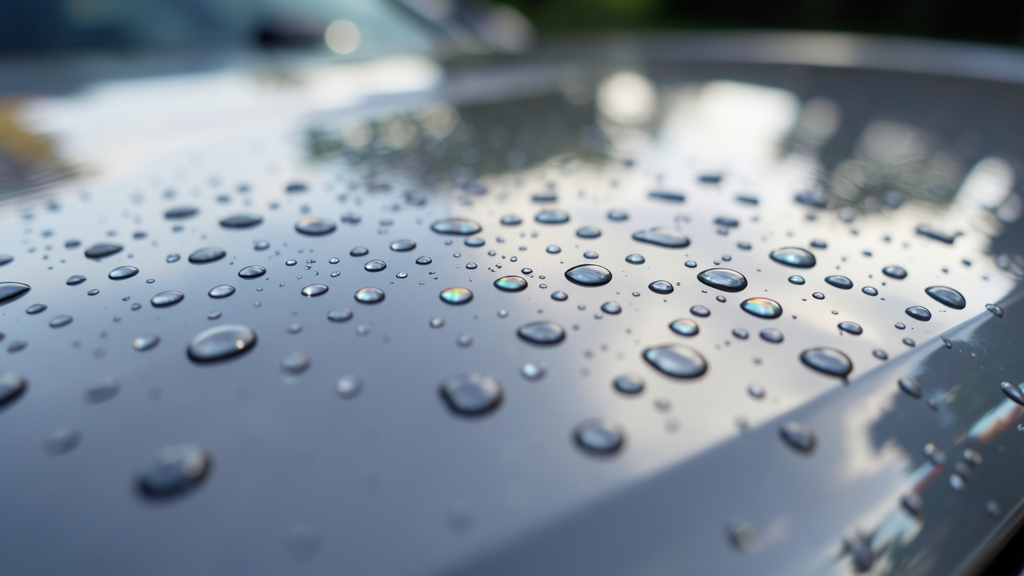
A true ceramic coating forms a hydrophobic barrier that repels water, dirt, and contaminants. But how do you know if yours is still performing? We’ll walk you through field-tested methods to verify the hydrophobic effect—right in your driveway.
Why Hydrophobicity Matters for Ceramic Coatings
Hydrophobicity isn’t just a cool party trick—it’s the coating’s first line of defense. Water beads up and rolls off, carrying dirt and grime with it. This reduces water spots and makes washing faster and safer for your paint.
In Ocala’s humid climate, a strong hydrophobic layer also fights mineral deposits from hard water. Without it, contaminants bond to the surface, leading to etching and dulling over time.
The Water Beading Test: Your First Check
The simplest test: spray a fine mist of water onto a clean, coated panel. A fresh ceramic coating will form tight, high domes that roll off instantly. Weak or failing coatings produce flat, spreading beads—or none at all.
For best results, use distilled water to avoid minerals skewing the test. Test multiple panels; inconsistency can signal uneven application or partial degradation.
Test in the shade. Direct sunlight can evaporate water too quickly, masking poor beading.
The Sheet Test: Assessing Water Flow
Pour a small, steady stream of water from a bottle onto the hood or roof. On a healthy ceramic coating, the water should sheet off in a continuous film, leaving the surface dry almost immediately.
If the water clings or breaks into rivulets, the coating’s hydrophobic properties are weakening. This often happens first on horizontal surfaces exposed to the most UV and heat.
Contact Angle: The Scientific Measure
The contact angle is the angle between a water droplet and the surface. High-quality ceramic coatings achieve 100°–120°. Below 90°, the surface is hydrophilic—water spreads instead of beading.
You can estimate this with a smartphone app designed for contact angle measurement. Or, visually compare the bead height to its base width: taller, narrower beads mean a higher angle.
| Contact Angle Range | Hydrophobic Quality | Visual Behavior |
|---|---|---|
| 110°–120°+ | Excellent | Tight, spherical beads; instant roll-off |
| 90°–109° | Good | Defined beads; slow roll-off |
| 70°–89° | Weak | Flat beads; partial spreading |
| <70° | None | Water sheets; no beading |
The Dirt Repellency Test: Real-World Proof
Sprinkle a pinch of fine, dry dirt (like road dust) onto a wet, coated panel. If the coating is strong, the dirt will float on the water beads and rinse away with minimal effort.
In Ocala, pollen and clay soils are common culprits. A failing coating lets these contaminants stick, requiring aggressive washing that can scratch the clear coat.
Never use abrasive dirt or sand for this test—it can scratch the surface. Stick to fine, soft particles.
When to Retest: Frequency and Conditions
Test your coating every 3–6 months, or after extreme conditions. Florida’s intense sun, frequent rain, and high humidity accelerate wear. Parking under trees or near construction zones can also introduce contaminants that degrade hydrophobicity faster.
After a professional wash or decontamination, retest to confirm the coating wasn’t stripped by harsh chemicals. Some pH-balanced soaps are safe, but alkaline cleaners can break down the ceramic matrix.
Retest Your Coating After:
- Severe weather (hail, heavy storms)
- Automatic car washes with harsh brushes
- DIY washing with unknown chemicals
- Prolonged exposure to bird droppings or bug splatter
Common Mistakes That Skew Your Tests
Testing on a dirty surface is the most common error. Even microscopic grime can flatten water beads. Always wash and dry the panel thoroughly before evaluating hydrophobicity.
Using tap water with high mineral content can leave residues that mimic poor beading. Distilled or filtered water gives the clearest results. Also, avoid testing in extreme cold—water behavior changes below 50°F.
What Poor Hydrophobicity Means for Your Coating
If your tests show weak or no beading, the coating may be nearing the end of its lifespan. Ceramic coatings in Ocala typically last 2–5 years, depending on the product and maintenance. UV exposure and improper care shorten this window.
Don’t wait for visible fading. Once hydrophobicity drops, the coating’s protection against UV, oxidation, and chemical stains is also compromised. Consider a refresh or a new application, especially if you’ve added modifications like PPF or window tint that need uniform protection.
How to Perform a Full Hydrophobic Test in 5 Steps
Follow this quick, repeatable process to assess your ceramic coating’s water-repelling power.
- 1Clean the Surface
Wash the test panel with a pH-neutral car shampoo and dry it with a microfiber towel. Any contamination will distort the results.
- 2Choose Your Water Source
Use distilled or filtered water to avoid mineral interference. Fill a spray bottle for the beading test and a small cup for the sheet test.
- 3Conduct the Beading Test
Mist the panel lightly. Observe the bead shape and roll-off speed. Compare to other panels for consistency.
- 4Run the Sheet Test
Pour a thin stream of water from 6–12 inches above the surface. Note how quickly and uniformly it sheets off.
- 5Check Dirt Repellency
Sprinkle fine dirt onto a wet section. If it rinses away effortlessly, your coating’s hydrophobicity is still strong.
Frequently Asked Questions
Can I restore hydrophobicity if my ceramic coating is failing?
Yes, but it depends on the cause. Light contamination can often be fixed with a decontamination wash and a maintenance spray coating. If the ceramic layer itself is degraded, a professional reapplication may be needed. In areas like The Villages or Marion Oaks, where dust and pollen are heavy, more frequent touch-ups help.
Does rain alone keep my ceramic coating hydrophobic?
Rain helps rinse off loose contaminants, but it doesn’t replace proper maintenance. Over time, minerals in rainwater can leave deposits that dull the hydrophobic effect. Regular washing with the right products is essential, especially in Ocala’s hard water areas.
Why does my coating bead less in winter?
Cold temperatures can temporarily reduce the coating’s hydrophobic performance. The ceramic matrix becomes slightly less active in lower temps. Once the surface warms up, normal beading should return. If it doesn’t, the coating may be wearing out.
Is hydrophobicity the same as gloss?
No. Hydrophobicity refers to water repellency, while gloss is about light reflection and shine. A coating can be hydrophobic without being glossy (or vice versa), though high-quality ceramic coatings like those we apply in Belleview or Silver Springs typically deliver both.
How does ceramic coating hydrophobicity compare to wax or sealants?
Ceramic coatings create a permanent, nano-ceramic bond with the paint, offering superior and longer-lasting hydrophobicity. Waxes and sealants provide temporary water beading (weeks to months) and degrade faster under UV exposure. For fleet or commercial vehicles in Dunnellon, ceramic coatings are the only practical long-term solution.